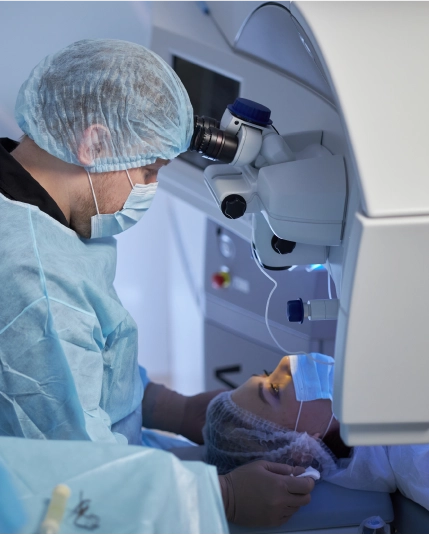
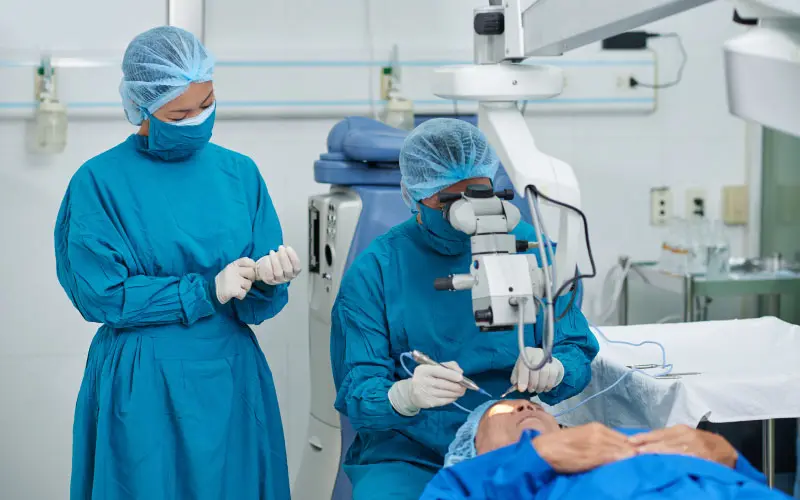
Laser-assisted cataract surgery is an advanced approach to cataract removal that uses a femtosecond laser to perform key steps of the procedure that have traditionally been done by hand. At Surgical Eye Experts in Bellaire, Geoffrey Collett, MD offers this bladeless option for patients seeking an added level of precision in their cataract surgery.
The femtosecond laser creates detailed 3D imaging of your eye and uses it to plan and execute incisions with computer-guided accuracy. Laser assistance helps us tailor the procedure to your eye and your visual goals. Schedule an evaluation today.
The main difference is how the incisions are made. In traditional cataract surgery, the surgeon creates the incisions with a hand-held instrument. In laser-assisted surgery, a femtosecond laser maps the eye and makes those incisions instead, with a level of precision a blade cannot match. The laser can also soften the cloudy lens before removal, which may reduce the ultrasound energy needed to break it apart. In both approaches, Dr. Collett personally performs the surgery and implants your artificial lens (IOL).
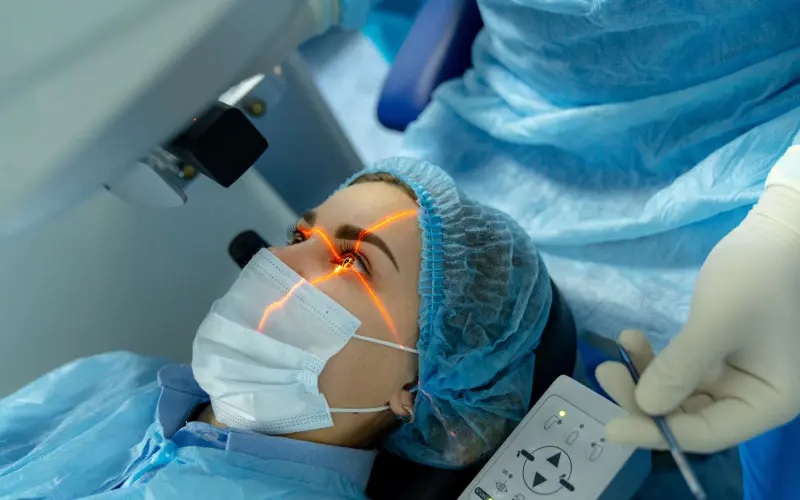
Precision: The laser builds a detailed 3D map of your eye and makes incisions to exact, computer-guided dimensions. That accuracy supports precise lens placement and can enhance your visual outcome after recovery.
Gentler on the eye: By pre-softening the cataract, the laser can reduce the ultrasound energy needed to remove it. For some patients, that means less corneal swelling after surgery and a quicker return of clear vision.
Astigmatism correction: The laser can place small, precise incisions on the cornea that help reduce low levels of astigmatism at the same time as your cataract is removed, sharpening vision clarity.
Safety: Cataract surgery is already one of the safest and most commonly performed surgeries. The femtosecond laser adds computer-guided control to key steps, which may further support its excellent safety profile.
Comfort first: You arrive at our own Bellaire surgical suite with a driver. Numbing drops and light sedation keep you comfortable and aware, with no pain.
Laser steps: The femtosecond laser maps your eye in 3D, makes the incisions, and softens the cloudy lens.
Your new lens: Dr. Collett removes the softened cataract and implants your chosen IOL through a small incision.
Home the same day: Your driver takes you home. Most patients can drive themselves to their one-day post-op visit. Your post-op instructions are on our forms page.
Traditional cataract surgery is covered by Medicare and most private insurance plans. Laser-assisted (bladeless) surgery is considered an upgrade, so the laser portion of the procedure is an out-of-pocket cost that insurance does not pay. Our surgical counselor will review the exact pricing with you before scheduling, and CareCredit financing is available.
Whichever route you choose, your surgery is performed by the same skilled surgeon. Laser-assisted cataract surgery is not the right fit for everyone - Dr. Collett will examine your eyes and help you decide whether the laser option makes sense for you.
Want to learn more about cataracts first? Read our blog post 'Clearing the Clouds: A Guide to Understanding Cataracts.'